
Kindle edition
Read it now.
For reviewers, sample readers and anyone who wants the argument without waiting for print delivery.
Buy KindleTrade non-fiction / ideas / society / technology
For ten thousand years our ideas needed us. Now the one move left is choosing what is worth keeping.
Creation is cheap. Attention is the scarce thing now.

Early review
"This book is worth reading for anyone who's interested in how the modern spread of information affects us as humans."
Rebekah Jorgensen, Reedsy Discovery
Read the Reedsy Discovery reviewPress pickup
The press release for The Great Inversion was picked up by Google News, AB Newswire, OpenPR, MENAFN and NBC, CBS and ABC affiliate sites.
Press-release syndication and pickup, separate from reader reviews.
The inversion
Stories needed bodies, memory, paper, institutions and time to copy themselves forward.
The feed made attention the expensive side of the transaction.
Generative systems weaken the old human bottleneck. Culture can now generate faster than people can judge it.
For readers of
Every book on the attention-economy shelf has said some version of "the phone is hacking your brain." That diagnosis is real. It is also incomplete.
The Great Inversion follows the deeper replicator story: what happens when the ideas moving through us no longer need us in quite the same way.
Editions
The digital and print editions use the same cover system: the inverted hourglass, bone paper and crimson ink.
Kindle edition
For reviewers, sample readers and anyone who wants the argument without waiting for print delivery.
Buy KindlePaperback edition
A 6 x 9 inch perfect-bound paperback on cream paper, with wider retailer listings appearing through the print feed.
Buy paperbackBook sample
Four passages from different points in the book: the private moment, the deep past, the AI turn and the final human claim.
From the preface
For most of human history, making a thing cost a lot and looking at a thing cost almost nothing. A story took a life to learn. A book took a monk a year. A photograph took a glass plate and a subject willing to hold still for forty seconds. You, on the receiving end, paid a breath of attention.
It just flipped. A sentence, an image, a voice: things that used to require a lifetime now cost almost nothing to make. The one thing that still costs is the hour of your life you spend looking. You are the expensive side of the transaction now, and the transaction did not ask your permission.
My daughter was three weeks old the first time I caught myself doing it.
It was sometime around two in the morning. The house was dark except for the hallway light we'd learned to leave on so we could find the bottle without knocking into things. She was in my left arm, small and impossibly warm, her face scrunched into the expression that meant she was about to either fall asleep or scream. My right hand held my phone. I was scrolling.
I wasn't looking for anything. I never am, at two in the morning. My thumb was just doing what it had been trained to do across ten thousand late nights before this one. The feed moved. A headline about some political fight I'd forgotten about by sunrise. A reel of someone's kitchen renovation. A meme about the exact kind of sleep deprivation I was living through.
The screen was reflected in her face.
From The Birth of the Meme
The fire is dying. The cold presses against the stone walls of the overhang. It carries the scent of pine and the distant, chilling cry of a predator. Inside, figures wrapped in thick animal hides lean closer together. Their faces are etched with exhaustion and reverence, illuminated only by the fading embers. At the centre sits an elder.
She is not just telling a story. She is fighting a war against oblivion.
She recites the location of the water sources that survive the dry season. She explains exactly which red berries will stop a fever and which ones will stop your heart. She chants the rhythm of the hunt. When to freeze, when to run, where to strike the great-horned bison to ensure a clean kill.
Her listeners are rapt. They are not being entertained. They are being programmed. Their survival depends entirely on their ability to upload this data into their own minds. There is no cloud backup. There is no written manual. There is only the fragile, biological wetware of the human brain.
This scene, repeated in a thousand caves across ten thousand years, is where the history of media actually begins. It is the original broadcast. And it reveals something fundamental about us. We are the only species that has figured out how to liberate information from our DNA.
From AI as Meme-Maker
Because something shifted between "the machine amplifies our worst impulses" and now. We have watched AI weaponise human culture: the cloned voices, the automated swarms, the slow collapse of shared reality. That was AI as tool. Powerful, dangerous, but still a tool. Someone pointed it. Someone pressed the button.
What happens when nobody presses the button?
For ten thousand years, the elder at the fire was the meme's vehicle. A joke died if no one repeated it. A melody vanished if no one hummed it. A belief faded if no one taught it to their children. The human mind was the essential substrate, the soil the meme grew in, the vehicle the meme rode in.
Large Language Models and image generators changed the equation. Not dramatically, not overnight, but with a quiet finality that we are only beginning to reckon with. Because now a meme can be generated, distributed, and amplified without a single human being involved in its creation.
The replicator has found a new host. Or rather, it has learned to replicate without one.
What do you do with that feeling? Is the resonance fake because the author is? Or is the resonance yours, and therefore real regardless of where it came from?
From The Hands Are Still Ours
In a cave in the north of Spain there is a wall of hands.
They are not painted on. They are sprayed around. Someone set a palm flat against the limestone, took ochre and water into the mouth, and blew, so that the colour landed everywhere the hand was not. When the hand came away the rock held the gap it had left, the exact shape of where a living thing had pressed itself to the world.
We have been reading those hands for somewhere near forty thousand years. Long enough that the language she thought in has no descendants. Long enough that the animals she feared are bones in other caves. Everything that filled her day, the smoke, the cold, the names, the fear, has been ground to nothing by that much time. The hand remains.
For all of those forty thousand years a thing like that hand could be made only once, by the one body it belonged to, and after that it could be copied poorly, by other hands, slowly, losing a little of itself each time. Making was dear and the copy was faint. That law has turned over inside a single human lifetime.
The copy is perfect now, and instant, and free. A machine can lay ten thousand handprints on ten thousand walls before she would have finished mixing her ochre. It can give you the colour and the spread of the fingers and the grain of the rock. It can give you the shadow. It cannot give you the body that cast it.
Buy the book
The Kindle and paperback editions are live on Amazon. Wider paperback availability is expected at major bookstores and library ordering channels as catalog feeds update.
Digital edition for Kindle and the Kindle app.
Buy Kindle on Amazon6 by 9 inch paperback, black and white interior on cream paper.
Buy paperback on AmazonPaperback listings are now appearing across retailer feeds. Availability, price and delivery time can vary by country.
Public profiles and review-platform records that help reviewers, booksellers and readers verify the launch.
Worth reading 😎 by Rebekah Jorgensen
About the author
Jordi ter Woord is a Dutch writer, solution architect and IT lead. He studied philosophy and artificial intelligence at Radboud University, then spent the last fifteen years building systems that move information inside organisations.
The book grew out of years spent close to information systems, then through research, repeated drafting and feedback from early readers with different backgrounds.
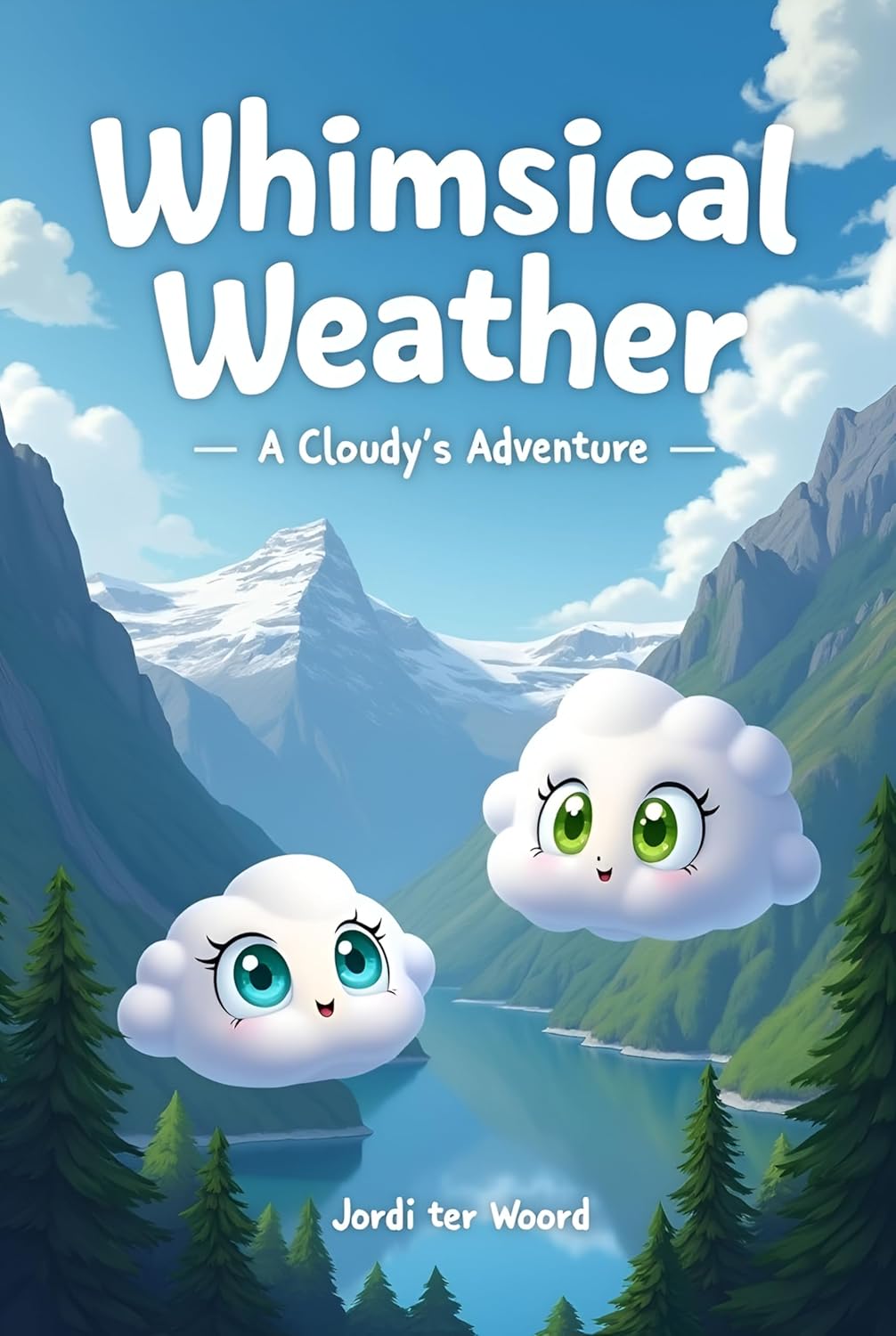
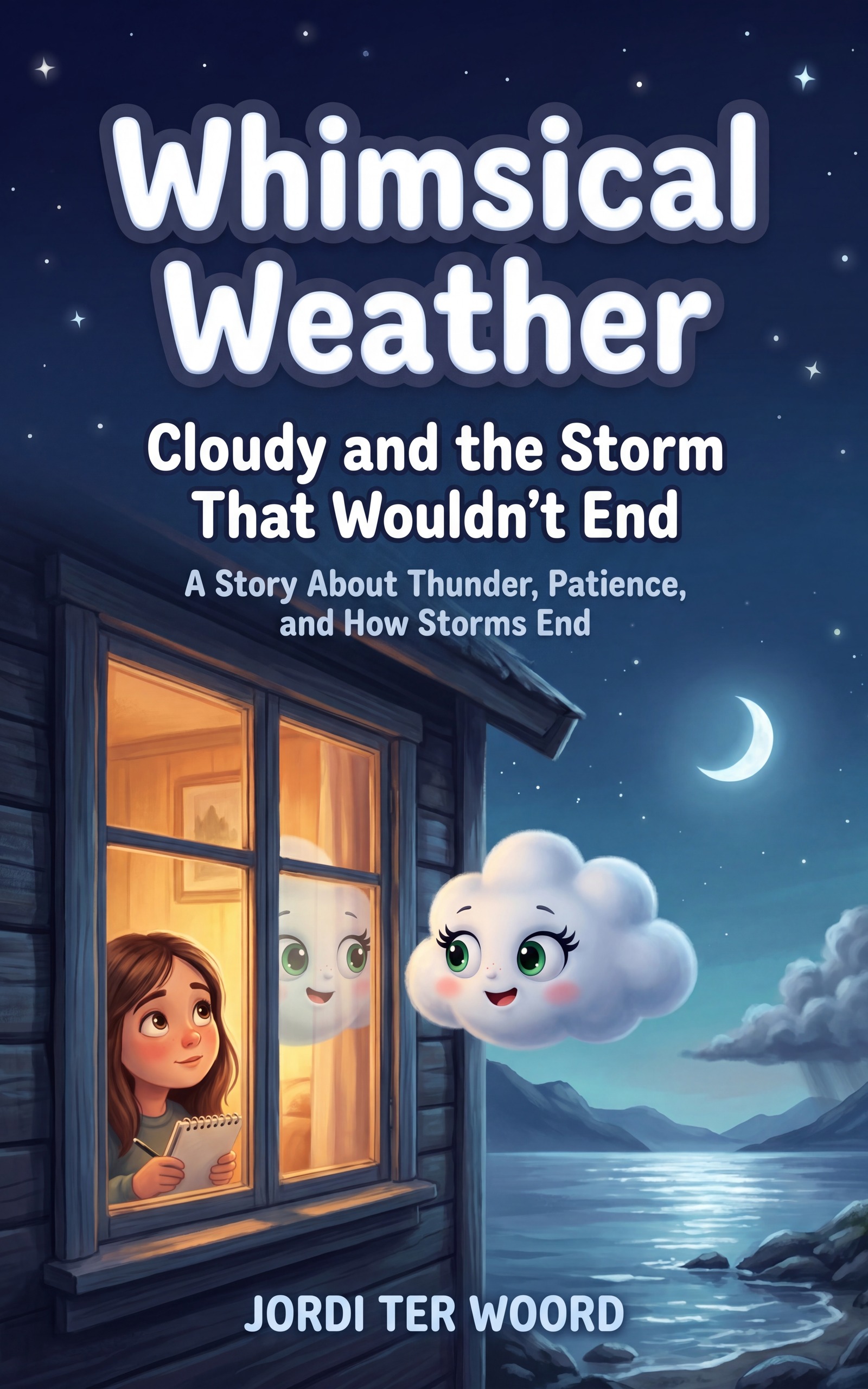
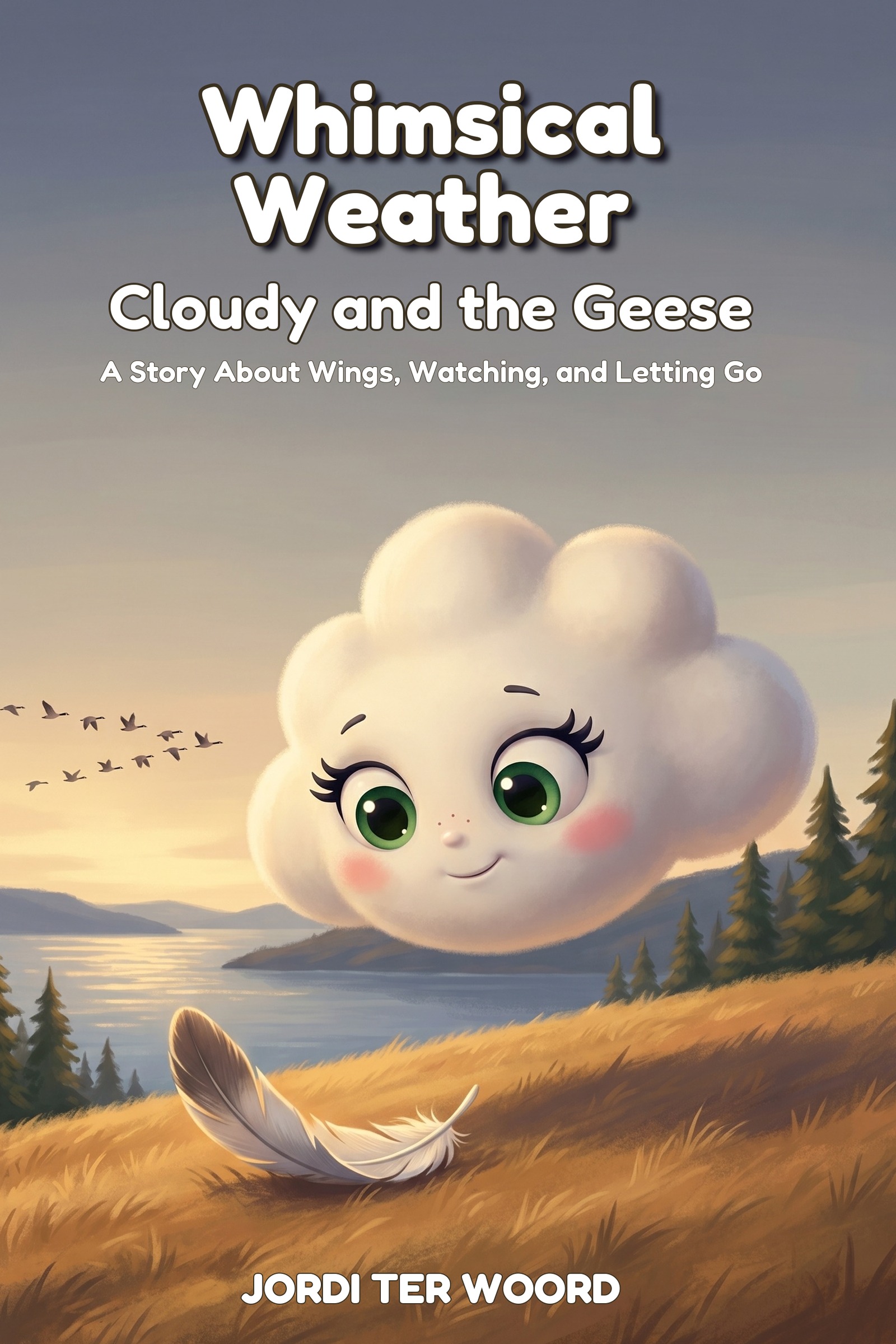
Also by Jordi
A three-book children's weather-adventure series, listed here so readers and platforms can connect the wider author record without confusing it with the non-fiction launch.